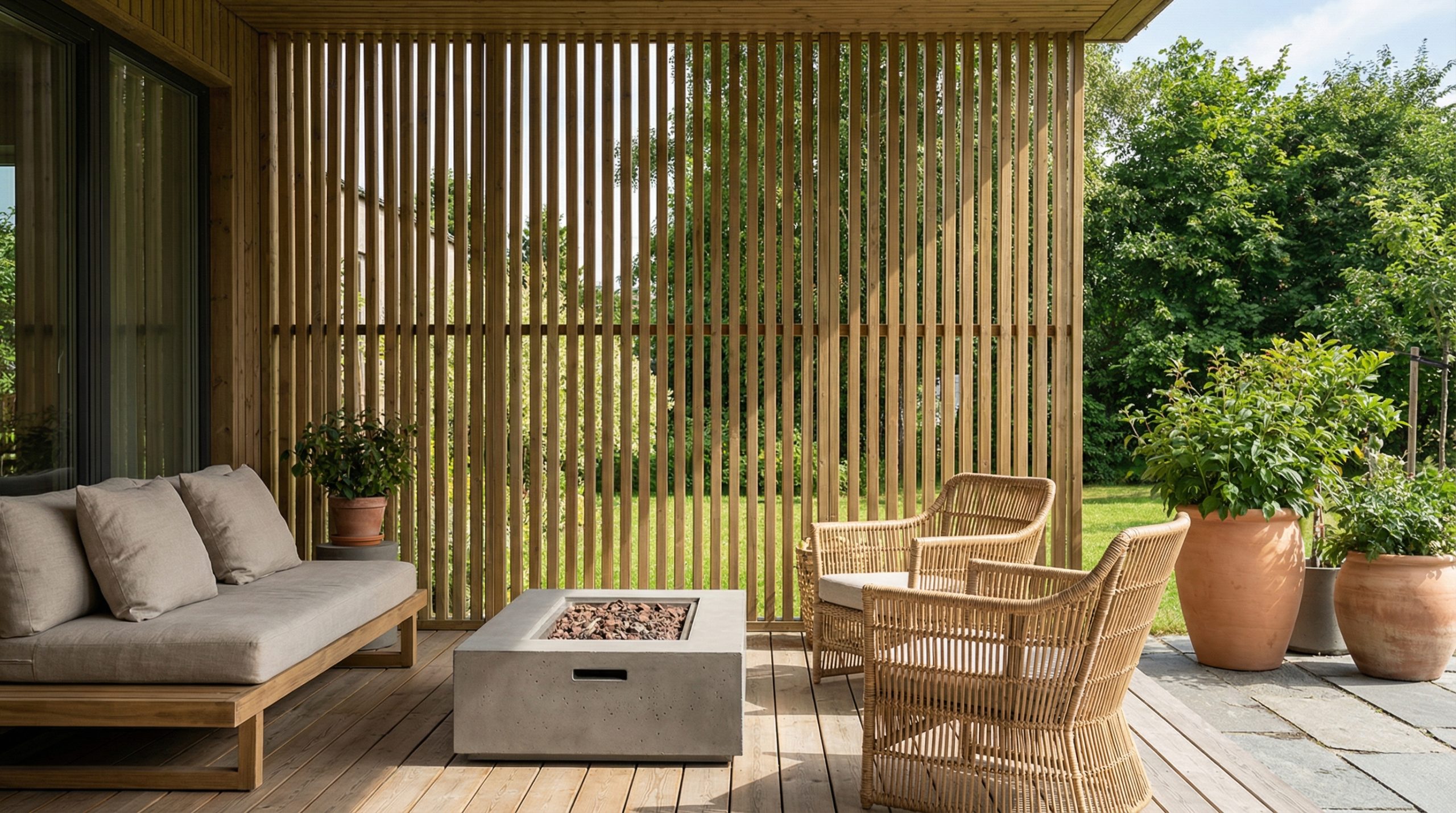
A patio slat wall often needs to solve several things at once. It should add privacy, offer some shelter from wind, and still let through enough light that the outdoor area feels open and comfortable to use.
That is why the spacing between the slats matters more than many people expect. If the gaps are too tight, the result can feel heavy and dark. If the gaps are too open, the wall may provide far less screening than you hoped for.
What determines the right spacing?
There is no single measurement that suits every patio. The right spacing depends on how the screen will be used and where it will stand.
The four biggest factors are usually:
- how much privacy you want
- how much light you want to keep
- whether the patio is exposed to wind
- how light or dense you want the final expression to feel
A slat wall that screens a nearby neighbor often needs tighter spacing than one that mainly defines a zone or creates a softer frame around the patio.
Tighter spacing gives more privacy
If the main goal is privacy, it makes sense to reduce the gap between the slats. The smaller the opening, the less you see through the wall, especially when viewed straight on.
That is why tighter spacing often works well when the wall functions as a privacy screen against neighbors, roads, or shared outdoor areas.
At the same time, tighter spacing affects the patio in other ways too. It lets in less light, can feel visually heavier, and often takes on more presence than a more open wall.
Wider spacing gives a lighter look
If you want to preserve a feeling of light and openness, a wider gap can be the better choice. This is often a good fit when the slat wall should soften the edge of the patio rather than close it off completely.
A more open solution can work especially well when:
- you want to define a zone without fully enclosing it
- the patio already receives limited daylight
- you want a lighter, more contemporary look
- the wall is more decorative than protective
For many projects, the best result comes from finding the balance point rather than pushing the wall all the way toward maximum privacy.
What about wind?
Wind is easy to overlook when you are focused on the appearance, but it matters. A fully closed screen can take more wind load than a slatted wall that allows some air to pass through.
That does not automatically mean you need wide spacing, but it does mean the whole structure should be considered carefully. In exposed areas, posts, fasteners, and overall sizing all matter.
Slat width also changes the result
The perceived density of the wall is not determined by the gap alone. Slat width matters just as much. Wider slats with small gaps feel much denser than narrower slats with the same spacing.
That is why slat width and spacing should always be judged together. Two setups can have the same gap in millimeters and still feel quite different once built.
A simple rule of thumb
If you are unsure where to begin, think about it this way:
- small gaps work best when privacy matters most
- medium gaps often create the best balance of privacy and light
- wider gaps work best when openness matters more than full screening
The right answer still depends on the project, but this makes the decision easier to frame.
How to test the idea before you build
Before deciding, look at how the patio is actually used. Notice where people can look in, where the sun lands, and how much privacy you want while sitting or moving through the space.
It can also help to test a few temporary boards or battens before building the full wall. That quickly shows whether the setup feels too dense, too open, or about right.
Once you have a rough spacing in mind, use the calculator to estimate how many slats and how much total length you need. That makes it much easier to compare alternatives before buying materials.
Summary
The right spacing for a patio slat wall is not just about a number in millimeters. It is about balancing privacy, light, wind, and overall expression.
If you want more privacy, the slats usually need to stand closer together. If you want the patio to stay bright and open, more spacing often works better. Use our slat wall calculator to test different combinations before you decide.