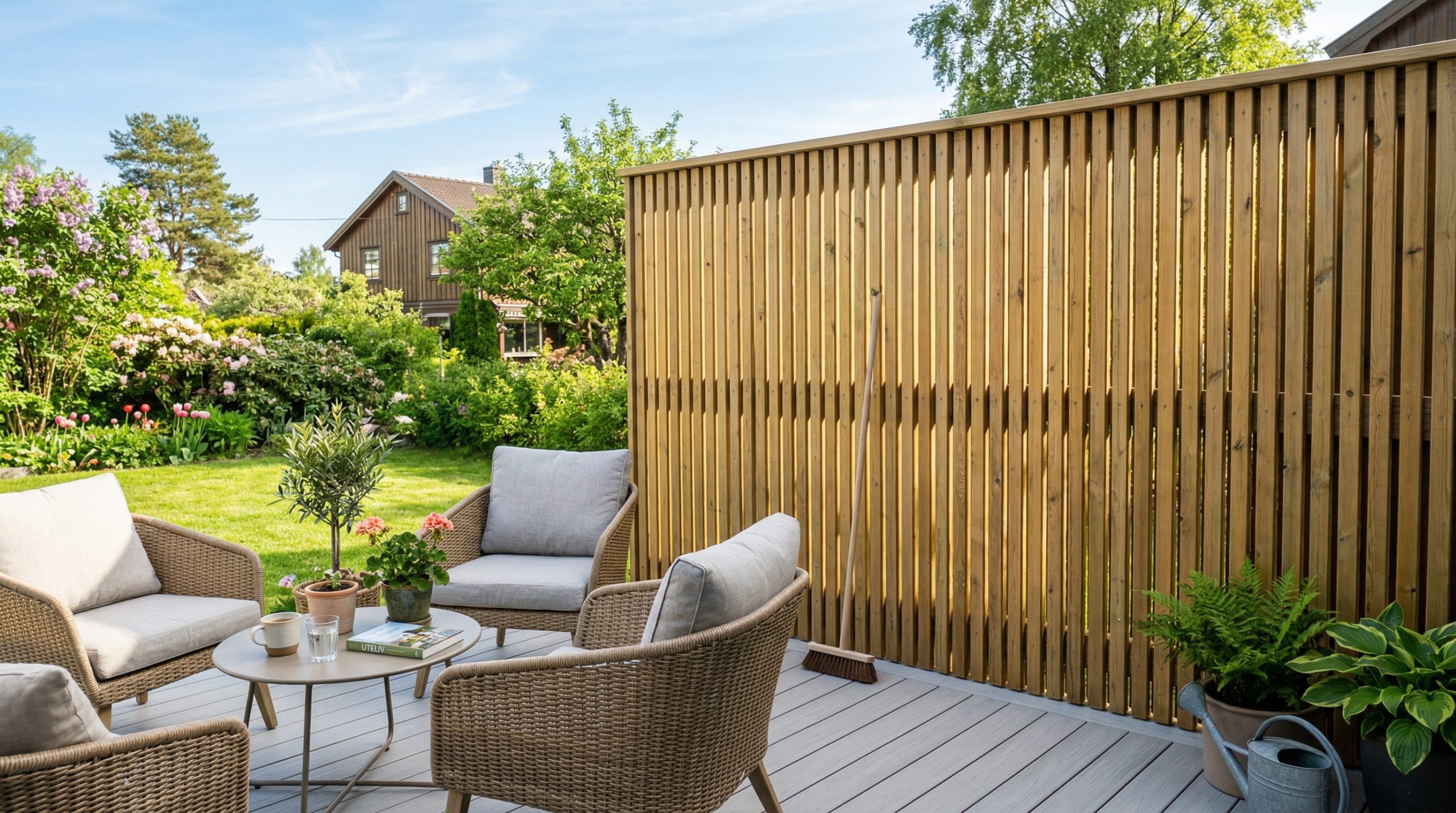
When spring arrives, many people start to see their outdoor space with fresh eyes. An outdoor slat wall that looked polished last year may now show dirt, discoloration, and small signs of wear after winter. That makes spring a good time to inspect the structure before you start using the patio, garden, or entry area again.
A simple spring refresh is not only about appearance. It also makes it easier to spot loose screws, cracks, early signs of rot, or surfaces that need fresh treatment. If you deal with those things early, the work is usually smaller and the result much better.
What should you check first?
Start with a calm visual review before you wash or treat anything. That makes it easier to see where the wall actually needs attention. Pay extra attention to areas that get a lot of moisture, little sun, or a lot of splashback from the ground.
- dark patches or algae on shaded sides
- cracks, twisting, or splintering in the slats
- loose screws, brackets, or unstable posts
- worn oil, stain, or other surface treatment
- signs that plants or soil are holding moisture at the base of the wall
If the slat wall is used as screening on a patio or in the garden, it is also worth checking whether winter wind has affected the fixings or alignment. A wall that still looks straight can still have connection points that need tightening.
How to wash the slat wall gently
In most cases, it is best to start with the mildest method. Often a brush, water, and a cleaner made for exterior timber are enough. The goal is to remove dirt and surface buildup without damaging the wood fibers.
Use a soft or medium-stiff brush and work from top to bottom. Rinse well and let the wall dry properly before you consider any new treatment. A pressure washer can work in some situations, but it should be used with great care. Too much pressure can raise the wood fibers and create a rougher surface that attracts more moisture and grime later.
If you are unsure how material choice affects maintenance, it can help to read more about the difference between indoor and outdoor slat walls. Outdoor builds place much higher demands on the wood, fasteners, and finish system.
When should you oil or stain again?
You do not necessarily need to treat a slat wall every spring. But once it is clean, it becomes easier to see whether the surface still protects well enough. If the wood looks dry, absorbs water quickly, or has lost a lot of its color, that can be a sign that it is time.
Wait until the timber is properly dry before you start. In unstable spring weather, it is smart to choose a spell with steady temperatures and a few dry days in a row. That usually gives better adhesion and a more even result.
For many people, it is enough to refresh the most exposed surfaces, such as the tops of the slats or the weather-facing side. The main goal is not to treat the wall as often as possible, but to treat it at the right time with a product that suits the wood species and the finish you want.
Small issues worth fixing before they grow
Spring prep is also a good time to correct small defects that get more expensive later. A loose slat, a screw that has started to work itself out, or an area that stays damp all the time is much easier to fix now than in the middle of the season.
If you are also considering changing the screening effect or extending the wall, our guide to slat spacing on a patio can help before you order more material.
A simple spring check makes the rest of the season easier
An outdoor slat wall rarely needs major work every year, but it does benefit from a regular spring check. A bit of cleaning, a review of the fixings, and a quick look at the finish are often enough to extend its lifespan and keep the wall looking good through the whole outdoor season.
Before you replace slats or build further, use the calculator to estimate how many slats and how much total length you need. That makes it easier to plan material purchases and keep the next stage consistent with the wall you already have.